Taking each challenge as it comes
In September 2022, Kristin Sterk went to the University of Michigan Hospital for a heart ablation, a minimally invasive medical procedure used to correct irregular heart rhythms. She’d been through the process three times before and knew what to expect.
This time was different.
When Kristin woke up from anesthesia, she learned her medical team had been unable to move forward with the procedure due to low blood counts. The hospital called Kristin’s husband, Dan, who was at home in Zeeland, Michigan, taking care of Mazy, their daughter. As Dan drove to the hospital, Kristin was moved to a room on the heart floor.
A hematologist came to ask Kristin questions: Had she been sick? Had she experienced any bruising, fatigue, etc.? At the end of their conversation, the hematologist told Kristin, “We think you have cancer. We don’t know exactly what kind yet, but we’re 75 percent sure you have cancer.”
Several hours later, a woman in a white coat entered the room with a thick book tucked under her arm. “I knew that book held the answer to what type of cancer I had,” Kristin says.
Sitting down on the edge of Kristin’s bed, the woman informed Kristin and Dan, who’d since arrived at the hospital, that Kristin had acute myeloid leukemia.
“Never would we have ever imagined something like that,” Kristin says. She turned to Dan, tears streaming down her face, and said, “I’m going to fight like crazy.”
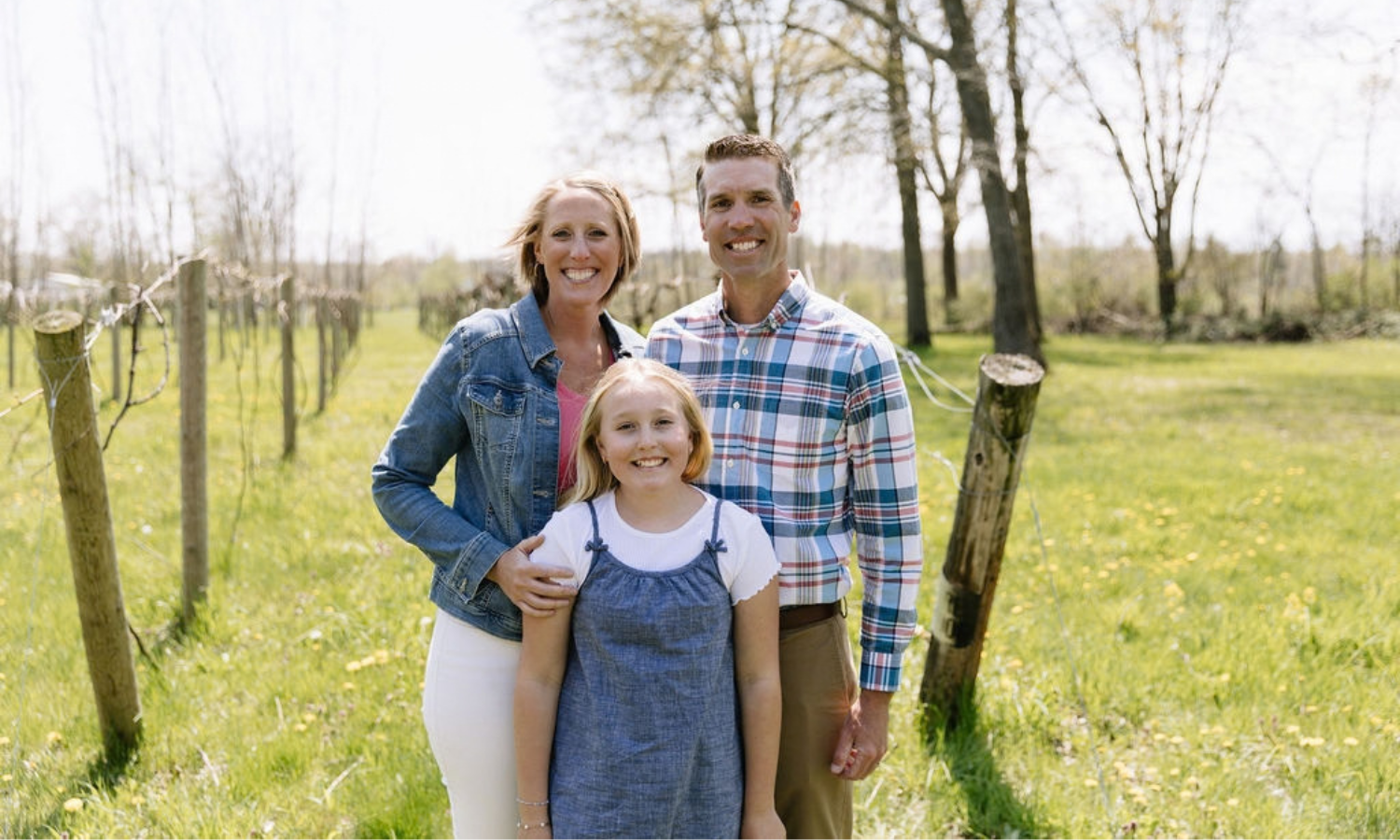
The doctor gave Kristin, now 42, a choice: She could go home that night, or she could stay in the hospital — to start chemotherapy within 48 hours — for about three to four weeks of treatment.
“I chose to stay,” Kristin says. “I was a little afraid that, if I went home, I would never come back because of denial. So that night, I was wheeled to the cancer [oncology] floor at the University of Michigan Hospital and began treatment the next day.”
Kristin responded well to the chemotherapy, managing the side effects better than expected. She spent just two and a half weeks in the hospital before going home to Dan and Mazy.
Over the next four months, Kristin returned to the University of Michigan Hospital weekly for continued outpatient treatment. In February 2023, she finished her treatment, entered remission, and began quarterly testing to ensure it stayed that way.
Several months later, in June, one of her tests showed a trace of leukemia. Kristin’s doctors suspected a false positive; the number was so small it could have been a fluke. By August, though, her blood tests confirmed the cancer was back.
This time, it seemed Kristin would face chemotherapy for the rest of her life because she didn’t qualify for a bone marrow transplant — not yet, at least.
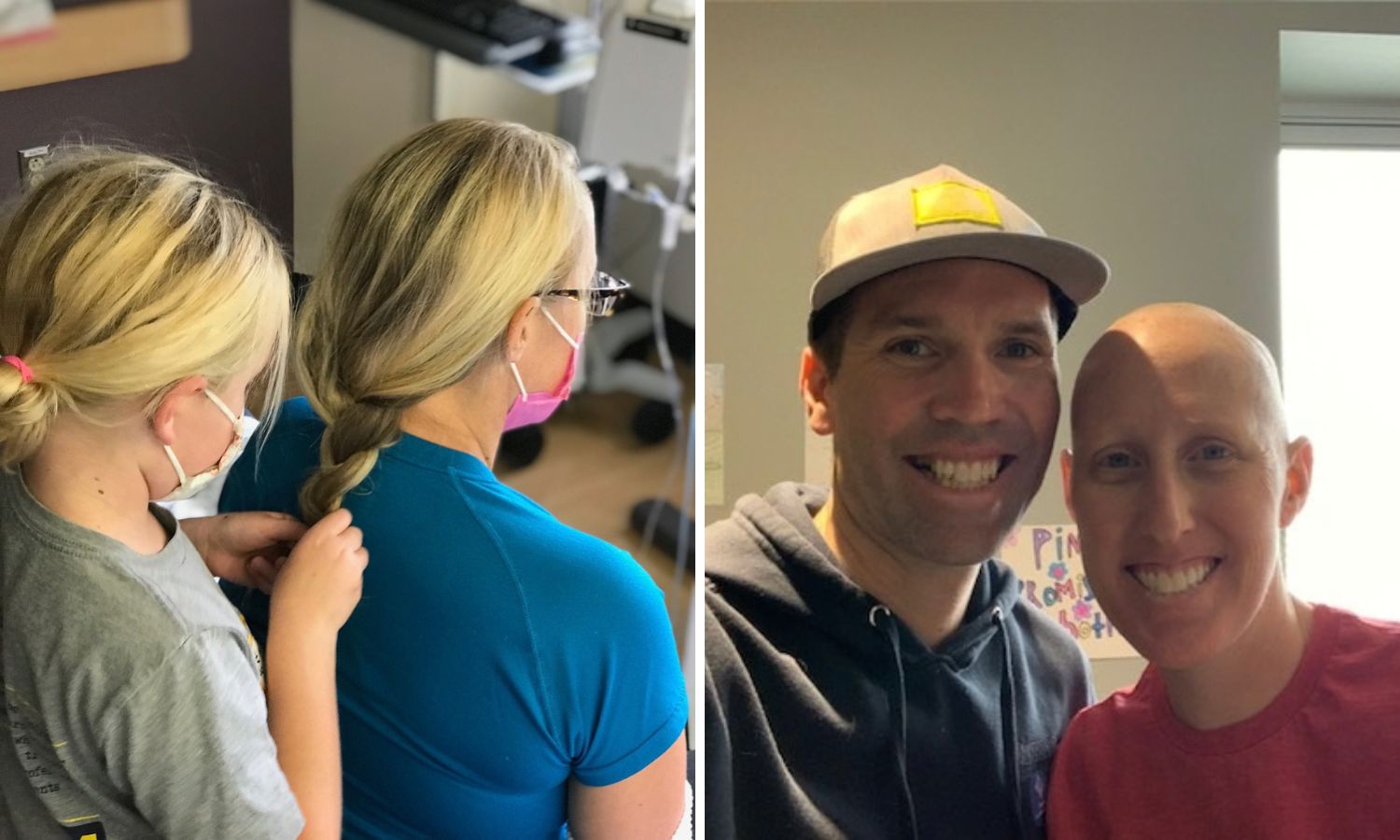
To understand why Kristin was an unlikely candidate for a bone marrow transplant, it helps to understand what she’d already been through. Because her leukemia diagnosis wasn’t Kristin’s first major health challenge.
In 2001, when she was 17 years old and an avid basketball player, Kristin was diagnosed with a congenital heart defect called Anomalous Left Coronary Artery from the Pulmonary Artery, or ALCAPA, in which the coronary and pulmonary arteries are connected.
ALCAPA is usually caught at birth, and most children with it don’t survive past five. But Kristin didn’t find out until she was nearly grown that she’d been living with it. Within a month of diagnosis, she had open-heart surgery to correct it and went on to live what she calls a “little more normal life,” though organized sports were no longer part of it.
Years later, after the birth of her daughter, Kristin developed severe heart failure. In October 2017, she underwent a second open-heart surgery to repair a mitral valve. It went well — until it didn’t.
Roughly a week after the surgery, Kristin was back at the hospital in the emergency room. She was dangerously lethargic. She was flown by helicopter from Zeeland Community Hospital to the University of Michigan Hospital, where doctors discovered the mitral valve repair had blown. Kristin needed another open-heart surgery just 17 days after the previous one.
The following year brought rounds of testing for a heart transplant, but there was always one test — required to get on the transplant list — that Kristin never quite passed. “I just kept pushing this heart along,” she says.
Kristin received an implantable cardioverter-defibrillator — a small device placed under the skin to monitor a person’s heart and respond to dangerous, life-threatening irregular heartbeats — and underwent three more heart ablations, leading up to the failed fourth one in September 2022 that uncovered her leukemia.
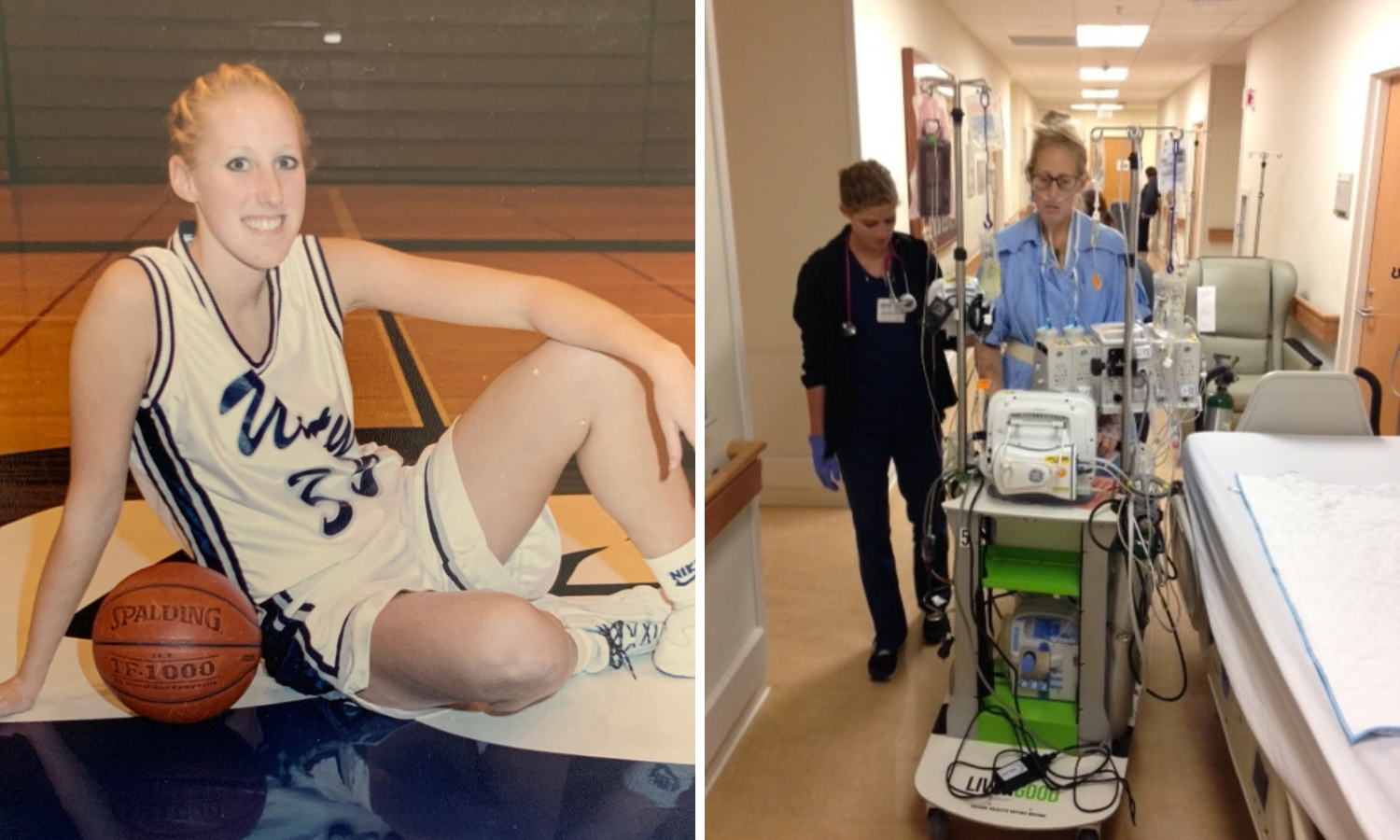
Now, back to the dilemma surrounding a bone marrow transplant for Kristin.
For a bone marrow transplant, doctors typically require an ejection fraction, a measure of how well the heart pumps blood, of 40 to 45 percent. Kristin’s best measurement at the time was 28 percent, so a transplant wasn’t an option.
Kristin’s medical team discussed a chemotherapy regimen that could last two years, with hope pinned on a future clinical trial. They also suggested, as a long shot, that she talk with the bone marrow transplant team just to see what they had to say.
“We talked to them, and it didn’t go well,” Kristin says. “In multiple facets, it just didn’t go well. So we went back to the drawing board.”
In September 2023, Kristin was standing in the pharmacy at her local Family Fare with her daughter when she received a phone call from the University of Michigan Hospital that changed everything.
“Hey, Kristin,” they said. “Everyone on your cancer and heart teams is talking, and we’re just trying to figure out what to do because you’re such a unique case on so many different levels.”
Kristin held her breath, unsure about what came next.
“We’re talking about doing a double transplant — a bone marrow transplant and a heart transplant, all at one time.”
This kind of double transplant, however, was only possible at Boston General Hospital in Massachusetts or the Mayo Clinic in Minnesota. Pursuing this path would mean uprooting Kristin’s family’s life — hundreds of miles from their family, community, work, and school — with no guarantee of a better outcome.
“To have this completed, we would’ve had to move to Boston or Rochester,” Kristin says. “The problem is the life expectancy out of a double transplant like that wasn’t great. We were overwhelmed, thinking, ‘We might have to move our entire family to try to survive all of this.’”
The next day, another call came. Kristin’s medical team asked her to get an echocardiogram, “just to see where your heart’s at.”
Following the test, Kristin did what you’re not supposed to do as a patient: She opened the email and looked at the results — before meeting with her doctor to go over them.
“My ejection fraction was 47 percent,” she says. “I was crying. I was shaking. I was like, ‘There’s no way my ejection fraction went up almost 20 percent from what it’d been a couple months before that.”
Kristin’s doctors also couldn’t believe it. They had her repeat the echocardiogram. This time, her ejection fraction was 44 percent, still well within qualifying range.
“The doctors were like, ‘We don’t even know what to do with this information! This isn’t the trajectory we were thinking,” Kristin says.
Kristin now qualified for a bone marrow transplant.
Since transplant patients must be within a 100-mile radius of the hospital for three to four months following the transplant, Kristin requested a transfer to Grand Rapids — closer to the Sterks’ home in Zeeland. A doctor in Grand Rapids accepted her case.
“Kristin, your heart history has really impacted a lot of our discussions,” he said. “On paper, it doesn’t look great. However, with your history, you also have perseverance. We often don’t see that, but it’s needed for a bone marrow transplant because it is a long process.”
Following more tests, all of which Kristin passed, the bone marrow transplant was a go.
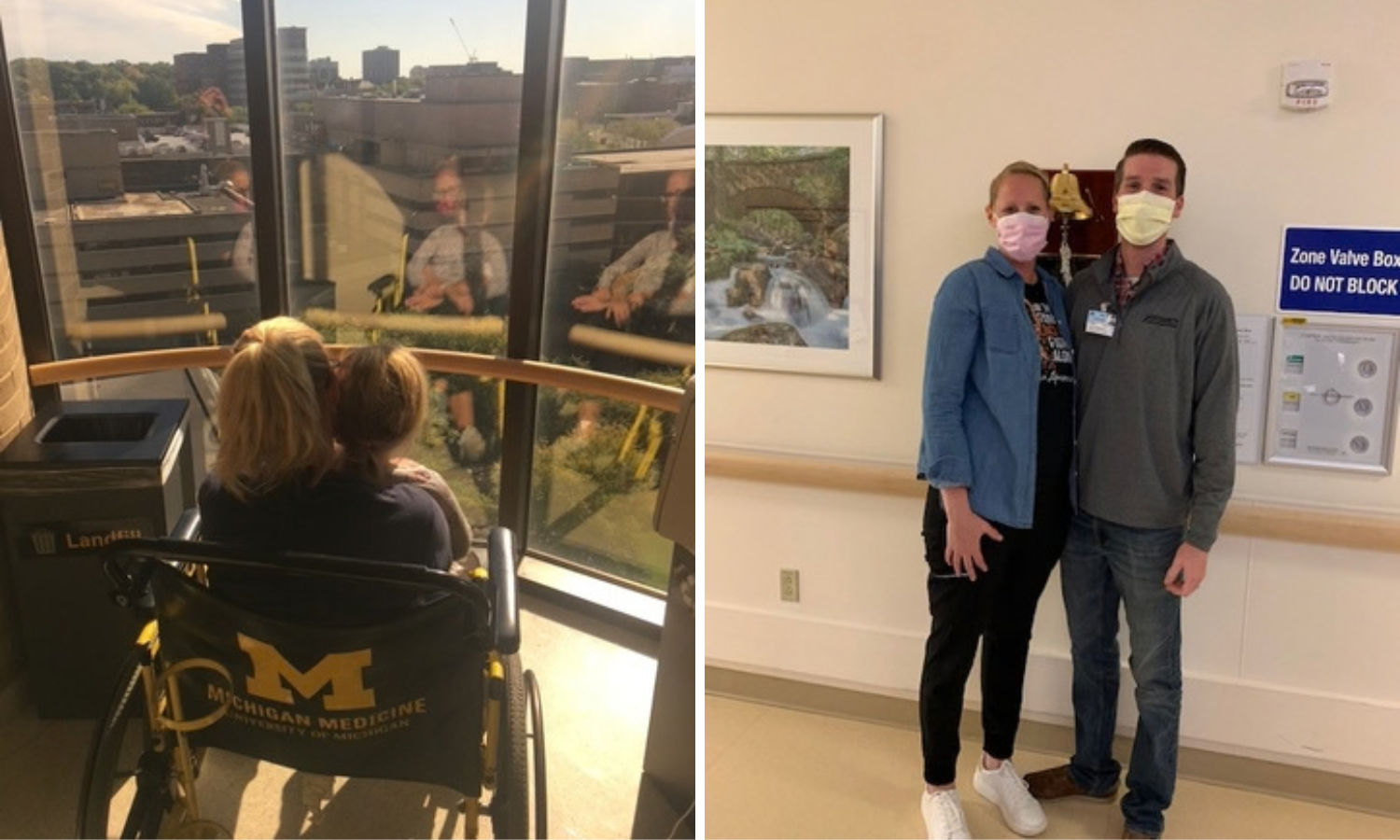
A young woman in Germany had been Kristin’s perfect match for the transplant, and on January 10, 2024, Kristin celebrated her “new birthday.” Dan brought cupcakes to the hospital to mark the occasion.
“It’s a fairly anticlimactic situation,” Kristin says. “They literally just put blood through a tube via IV or via your port.”
The transplant carried new hope for Kristin and her family, as well as a different kind of hardship. Because of the infection risk, Mazy, who was eight years old at the time, couldn’t visit her mom during treatment. Being apart from one another for 20 days was one of the hardest parts of the bone marrow transplant for mother and daughter.
“Mazy has gone through a lot of hardships because of all of this,” Kristin says. “She’s navigating anxiety and attachment issues. She sees a counselor. My leukemia has impacted our family negatively in that sense, but it has also helped Mazy write her story. She’s also told me and Dan that she feels it’s brought us closer together as a family and made her braver.”
These days, Kristin sometimes sleeps in Mazy’s bedroom with her, as there are nights when she fears her mother won’t come home. “Once a cancer diagnosis, always a cancer diagnosis, in a way,” Kristin says.
For Dan, the challenge in Kristin’s bone marrow transplant was being present for both Kristin and Mazy. It felt like a tug-of-war for him, trying to be in two places at once. Often, after dropping Mazy off at school, Dan visited Kristin at the hospital in Grand Rapids. Throughout, he and Kristin were grateful his job was flexible, giving him time to visit Kristin every morning before going to work.
The side effects of the chemotherapy and bone marrow transplant were brutal at times and challenging at others, but Kristin says the extended isolation from community was the hardest part for her.
“Our life revolves around our family and friends and our church and school. Following the bone marrow transplant, I couldn’t really be around any of them [due to infection risk],” she says. “I’m a very social person, and the transplant disrupted my normal routine — or what I thought should be a normal routine.”
However, even at a physical distance, the Sterks’ community supported their family every step of the way. On this journey, Kristin has been floored by the power of community.
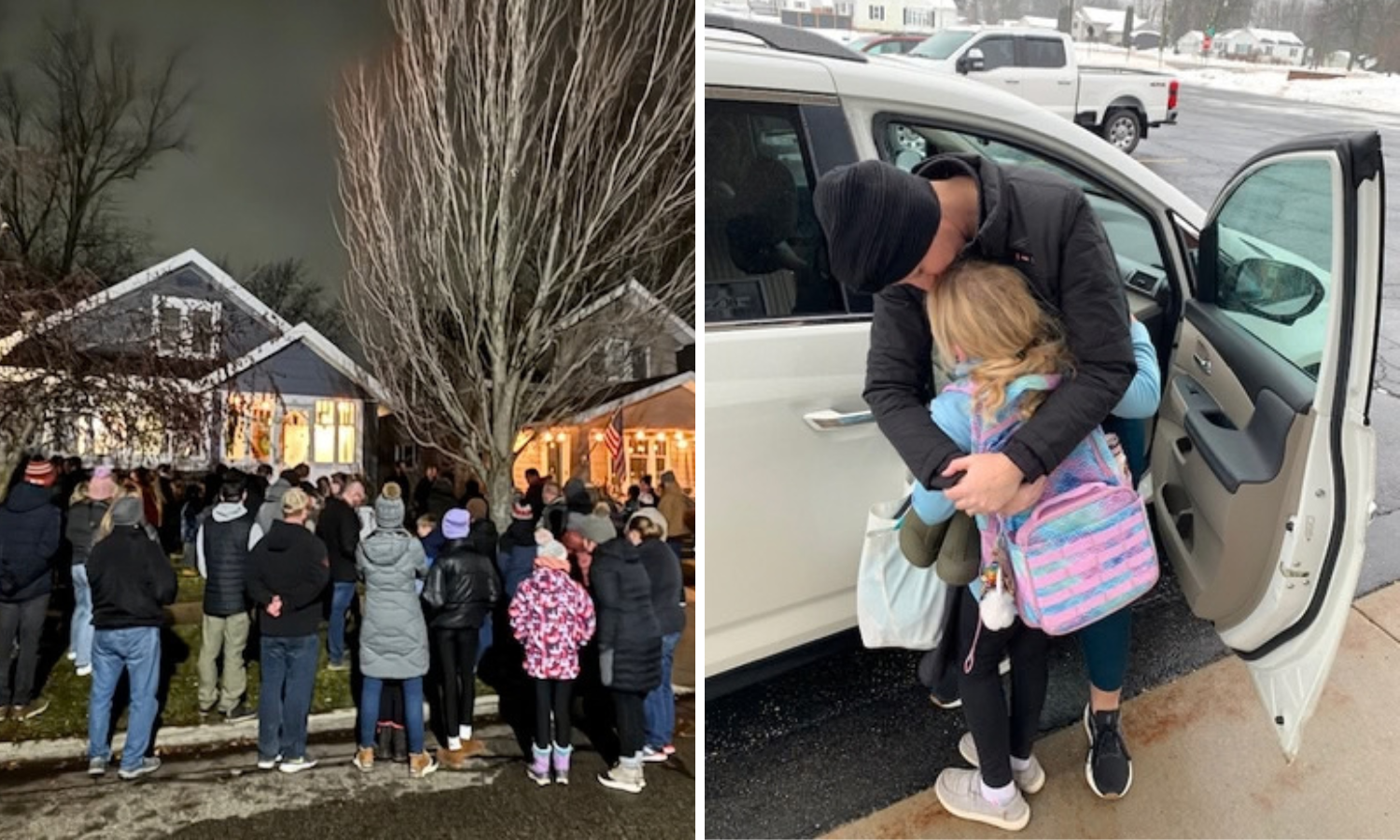
The community that has enveloped Kristin and her family on their journey extends to The Blood Cancer Foundation of Michigan [BCFM].
Kristin’s connection to BCFM came, following her leukemia diagnosis, through a social worker at the University of Michigan Hospital. Early on, BCFM’s Reimbursement Program provided relief for one of the family’s more immediate needs: money for gas. When you live in Zeeland and routinely travel to Ann Arbor for appointments and treatment, the miles add up fast — as does the cost of gas, on top of medical bills that had already strained the Sterks financially.
BCFM’s Holiday Toys Program was also impactful for the Sterks. “That first Christmas, I was in chemo and couldn’t really go Christmas shopping,” Kristin says. “For me to be able to list a few things that Mazy really wanted and then have them show up on our doorstep, it just brought me to tears. I remember weeping over the fact that somebody I didn’t even know would buy our daughter Christmas gifts.”
Beyond the financial support, Kristin points to the emotional support she received from Brittany, BCFM’s Director of Patient Support, who consistently called to check in on her and her family.
“She was always so joyful on the phone, yet also understanding of my circumstances,” Kristin says. “She was always there to listen. I could just be myself and not try to hold it together. That’s what The Blood Cancer Foundation of Michigan does. They walk alongside you, offering support that you may not realize you need.”
Brittany still checks in with Kristin today.
Over the years, in addition to BCFM, the Sterk family has received support from their church and school communities as well as Shields of Hope. One year, Mazy’s school ran a fundraiser to support the family, ultimately allowing them to end that year with no medical bill debt. And when the Sterks’ van — their reliable vehicle for travel between Zeeland and Ann Arbor — died, the community raised enough money to buy them another van.
“It just shows the enormity of what people did for us,” Kristin says.
Accepting help, both financial and practical, did not come naturally to Kristin before her diagnosis. But the leukemia left her no choice. “Once I let my guard down and allowed people into my life and into my story, that was when really beautiful blessings came that I would have never expected,” she says.
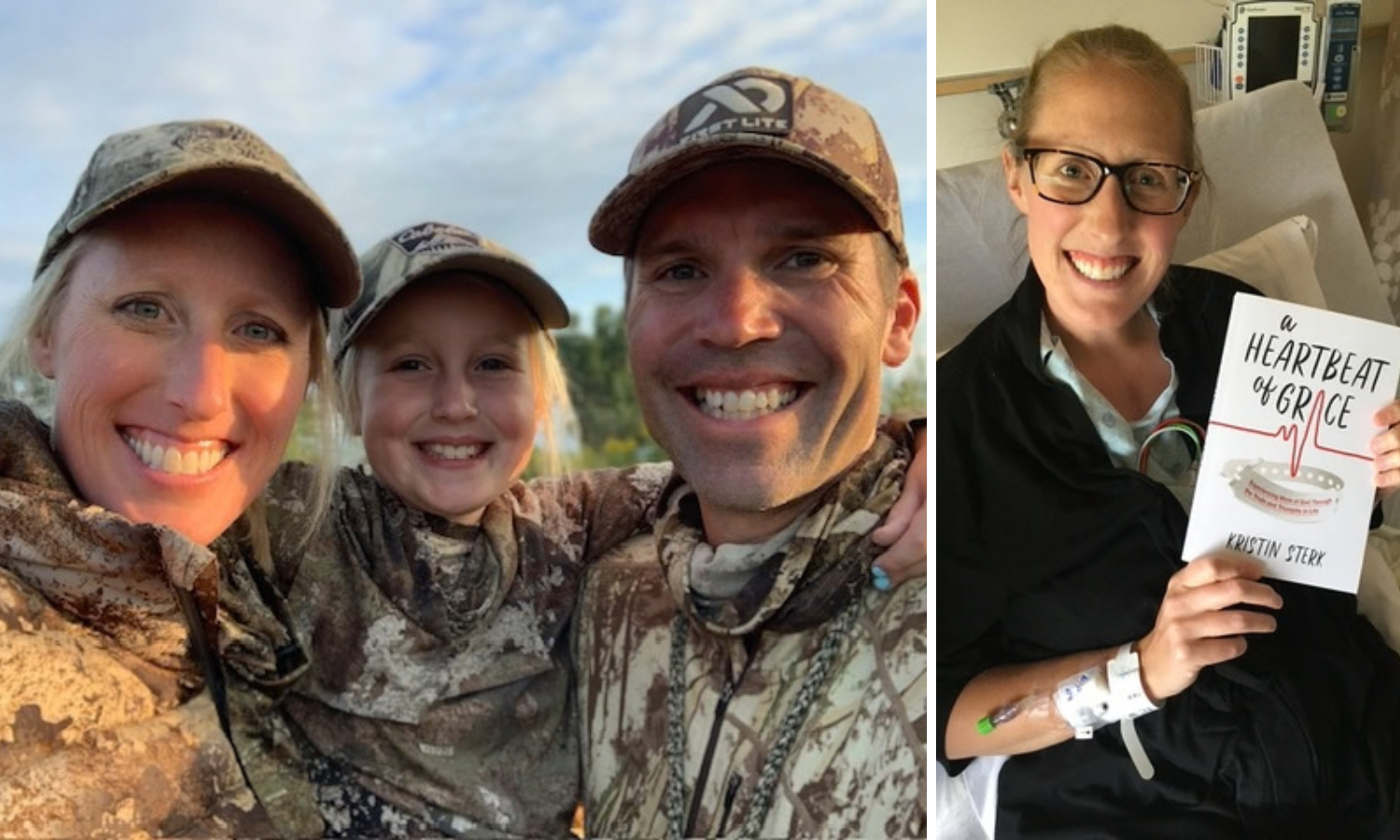
Today, Kristin is two and a half years post-transplant and doing well, though she won’t be considered fully in remission until the five-year mark. Knowing what she knows now, she shares relatively straightforward advice for anyone newly facing a diagnosis like hers.
“You can do it,” she says. “It’s okay to grieve. It’s okay to feel the pain that this has caused. But don’t allow it to define you. Let it catapult you toward something greater.”
Kristin is honest that healing hasn’t erased the hard parts. She wouldn’t choose to repeat any of it, and also, she wouldn’t trade any of it. “Those are often the times when we grow the most, through hardship,” she says.
In her day-to-day, Kristin volunteers alongside her husband, a youth pastor, in their church’s youth ministry; works as a paraprofessional at Mazy’s school; and writes in whatever time is left over, blogging about faith, simple living, and the small graces of ordinary days. She’s also the author of A Heartbeat of Grace.
Her writing, she says, isn’t really about her. “I want to share my heart in whatever way it might relate to somebody else and their story or just so that they don’t feel like they’re walking their journey alone,” Kristin says. “I think there’s power in choosing to open up about our stories.”
Undoubtedly, Kristin’s story — one of courage, faith, and perseverance — is worth sharing. Her story is a testament to the importance of taking each day, or challenge, as it meets you. It’s about living for the moment and not getting caught up in what could happen in the future.
“That’s completely how I strive to live,” Kristin says. “Do I struggle sometimes? Yes. I think all of these challenges have really helped me realize that I don’t number my days. I wake up every day thinking about how I’m going to spend the hours I’ve been given to live. It’s like, ‘Wow. It’s a new day. I get to live this day.’ Has it been easy? No. I could be diagnosed with cancer again, but that doesn’t hold me back. I’m just eager to live every day to the fullest.”
“She was always so joyful on the phone, yet also understanding of my circumstances. She was always there to listen. I could just be myself and not try to hold it together. That’s what The Blood Cancer Foundation of Michigan does. They walk alongside you, offering support that you may not realize you need.”